Shop Sets
Set Collection


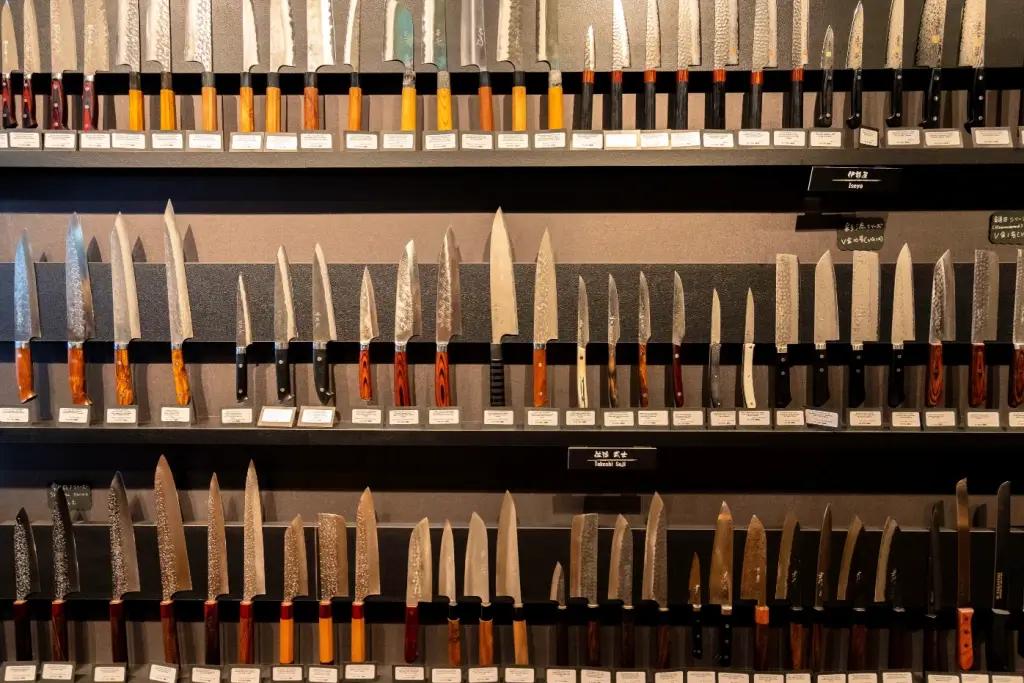
Nowadays, it’s easy to own Japanese knives right where you live through online shops and shopping platforms. Yet, choosing the right knife in person, verifying its rarity and authenticity, and consulting true Japanese knife craftsmen about quality and proper care are things online shopping cannot fully offer.
These experiences often require traveling to Japan and visiting master bladesmiths directly to find a piece that truly fits your needs. Keep reading if you are interested in learning how to bring back knives from Japan properly!
Some knives might face a high risk when taken out of Japan. First, double-edged daggers with blades over about 5.5cm (2.16) are closely regulated by weapons law. They can be treated like swords, not kitchen tools.
Next, switchblades, automatic knives, and gravity knives are banned or tightly restricted. Customs officers often stop them immediately. Additionally, sword-length blades such as a katana or a wakizashi need special registration. Even full-size replicas may be recalled if they break weapons rules.

Another group that raises concern is knives designed for combat or self-defense. If a knife is marketed with aggressive language or imagery, it attracts additional scrutiny. Even when the blade shape looks legal, its purpose matters. Sharp points, thick spines, and fighting-style guards increase risk. Collectors should also be careful with oversized novelty knives. These items may look fun, but they feel unsafe to officers.
Beyond blade shape, materials can also cause serious problems. Some high-end Japanese knives use rare woods like rosewood, ebony, or bubinga for handles. These woods may be protected under CITES for endangered species. If you lack papers, customs may seize the entire knife. To reduce risk, choose oak, magnolia, or modern composite handles. Clear labeling helps prove the material is legal.
There is no federal limit on the number of knives you import. However, U.S. Customs allows only $800 duty-free per person. Above that value, taxes may apply, but knives are usually still allowed. State laws vary and are very important. Some states ban automatic or gravity knives even after import.

Packing this kitchen tool for a flight home requires care, patience, and respect for travel rules. To begin with, always place every knife inside checked luggage, never in carry-on bags. Security officers strictly ban sharp objects in the cabin, regardless of value or quantity. Keep the blade in its original box with seals unbroken when possible. Before flying, it is wise to confirm the rules with your airline or airport staff. Clear communication helps avoid stress and delays.

After that, focus on safe packing to protect both people and luggage. Wrap the boxed knife with clothing or bubble wrap for extra padding. Place it in the center of the suitcase, away from hard walls and corners. This prevents the blade from cutting through the bag during handling. Keep receipts and tax-free papers together and easy to show. These documents explain the knife’s origin and purpose.
Finally, understand the rules and the possible punishments if mistakes occur. A loose knife or broken seal can raise serious concerns at security checks. In Japan, carrying an unsealed knife over 15cm (6 in) may lead to questioning or fines. Moreover, in some cases, the knife may be permanently taken away. In the United States, knives are allowed in checked bags, but state laws still matter. Therefore, careful packing protects your blade and your journey.
For short trips or business travel, checked luggage can feel heavy and unnecessary. In these cases, posting knives home is often a wise choice. Mailing lets travelers move freely without carrying sharp tools. Japanese knives can be safely sent if packed with great care. This method is popular for gifts or multiple purchases. It also suits people already shipping other items home. Yet, planning is essential to avoid damage or trouble.
When sending blades by post, careful packing is the key note!

Moreover, choosing a trusted shipping company is also very important. Some services refuse knives, so checking their rules in advance is essential. Reliable international couriers include DHL Express, FedEx, UPS, TNT, and U-Global Express. These companies understand U.S. customs procedures and handle tariffs more smoothly.
Shipping Japanese knives to the United States may involve import duties, even for personal purchases. Due to U.S. tariff rules, mailing can sometimes be clearer than carrying them in luggage. For this reason, posting remains a practical option when returning to the United States.
You need to understand these matters since bringing cultural tools across borders is also about respect, safety, and shared responsibility. Japanese knives carry history, skill, and meaning, so rules exist to protect people and traditions on both sides. When travelers understand these ideas, journeys feel calmer and more confident. Overall, clear knowledge helps avoid fear, confusion, or sudden trouble at airports and borders.

Thinking ahead allows your experience with traditional Japanese blades to stay positive long after the trip ends. Laws, travel systems, and customs officers all focus on balance, not punishment. Following guidance supports smooth travel and fair treatment everywhere.
In your own experience, have you ever brought a special item home from another country, and what did you learn from that journey? Feel free to share your story in the comments below!
©2026 ZAKU Knife - All rights reserved
SUBSCRIBE TO OUR NEWSLETTER
Bet the first to know about our latest and exclusive deals