Shop Sets
Set Collection


Japan’s traditional “Golden Triangle” usually refers to Tokyo, Kyoto, and Osaka, the country’s most heavily visited tourism corridor. Travel media sometimes refers to the route connecting Kanazawa, Shirakawa-go, and Takayama as Japan’s “Second Golden Triangle.”
Unlike the larger metropolitan regions of Tokyo or Osaka, cuisine along the Kanazawa–Shirakawa-go–Takayama route reflects colder weather, mountain environments, and ingredients closely connected to the Sea of Japan and the Japanese Alps.
From seafood and traditional dining in Kanazawa to preserved mountain dishes in Shirakawa-go and premium Hida beef in Takayama, the region offers a very different culinary experience from Japan’s major urban centers.
Kanazawa is often compared to Kyoto because of its preserved historical districts, traditional arts, and long-standing culinary culture. Located near the Sea of Japan, the city has access to a wide variety of regional seafood.

One of Kanazawa’s best-known food destinations is Omicho Market, a large seafood market that has operated for centuries. Vendors throughout the market commonly sell fresh crab, sweet shrimp, sea urchin, scallops, tuna, and yellowtail, while many restaurants specialize in seafood bowls topped with seasonal catches.
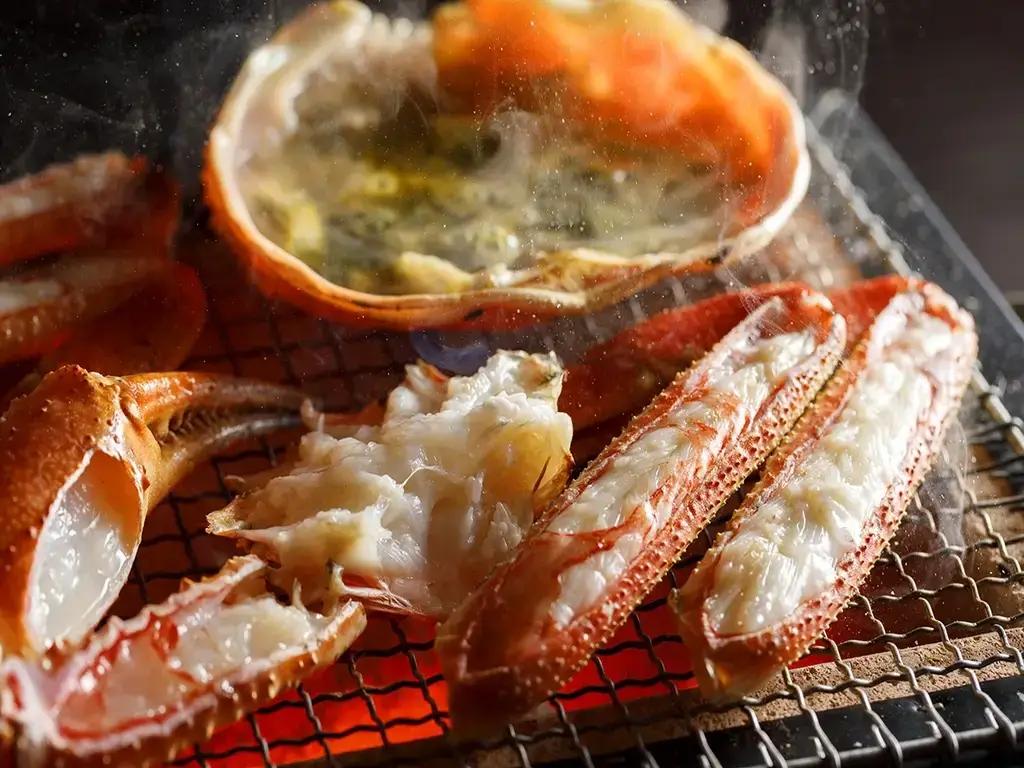
Winter is especially important for Kanazawa cuisine because of the snow crab season. Fishermen harvest Kaga-branded snow crab in Ishikawa Prefecture, and chefs frequently feature it as a luxury food in winter kaiseki meals and seafood restaurants.
People also associate Kanazawa with Kaga cuisine, a regional culinary tradition historically connected to the former Kaga Domain. The cuisine emphasizes seasonal ingredients, refined preparation techniques, and presentation tied closely to Japanese aesthetics.
Traditional vegetables known as Kaga yasai remain another important part of the city’s food culture. Ingredients such as Kaga lotus root, sweet potatoes, and local greens continue appearing in regional dishes today.
Located in the mountains of Gifu Prefecture, Shirakawa-go is famous for its historic gassho-zukuri farmhouses. The village’s mountainous geography contributed to the preservation of regional food traditions connected to rural life and long winters.
Cuisine in Shirakawa-go developed around ingredients that could withstand colder temperatures and limited agricultural conditions. Rather than relying heavily on seafood, the area became known for preserved foods, river fish, vegetables, and warming dishes suited to mountain climates.

One of the region’s best-known specialties is hoba miso. In this dish, cooks grill miso paste on a magnolia leaf over charcoal. They often serve it with mushrooms, scallions, or slices of beef. The dish reflects cooking methods historically linked to mountain homes.
Soba noodles are another important part of the area’s food culture. Buckwheat grows well in mountainous environments, and handmade soba remains a staple throughout many alpine communities in central Japan.
Some restaurants in Shirakawa-go serve meals inside preserved or restored farmhouse-style buildings. These spaces let visitors enjoy regional cuisine in settings that evoke the village’s historic atmosphere.
Are you looking for amazing knives for making food? Check out ZAKU! ZAKU has authentic knives handmade in Japan for all of your culinary needs!

Among food travelers, Takayama is perhaps best known for Hida beef, one of Japan’s leading wagyu brands. Produced in Gifu Prefecture, Hida beef is recognized for its marbling, tenderness, and rich flavor.
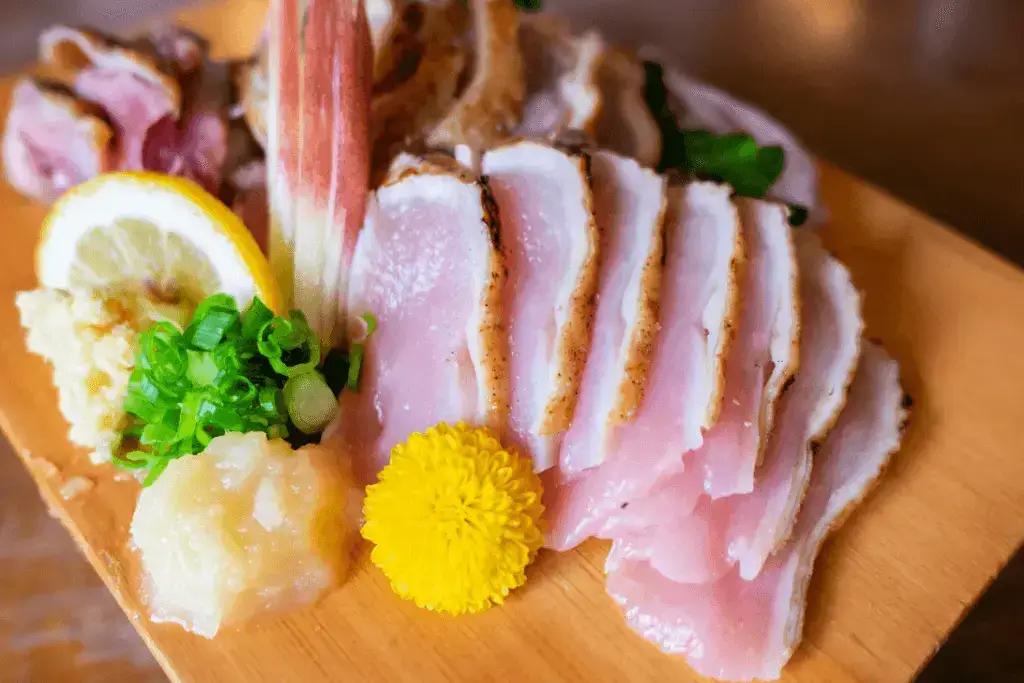
Restaurants throughout Takayama serve Hida beef in several forms, including grilled skewers, sushi, hot pot, and steak. Hida beef sushi has become especially popular with visitors exploring the city’s preserved old town district, where many small shops sell bite-sized servings topped with lightly seared wagyu.
Takayama’s cuisine is also heavily influenced by its mountainous environment and colder winters. Similar to Shirakawa-go, many dishes emphasize preserved ingredients, miso, and warming comfort foods.
Takayama ramen differs noticeably from ramen styles commonly associated with larger cities. The broth is typically soy sauce-based, while the noodles are thinner and lightly curled. The style differs from richer ramen varieties often found in larger urban areas.
The city is also known for sake production. Cold temperatures and clean mountain water helped Takayama develop into one of central Japan’s notable sake-brewing regions. Historic breweries continue to operate in parts of the old town today.
One reason cuisine along the Kanazawa–Shirakawa-go–Takayama route feels distinct from Tokyo or Osaka is that local food traditions developed under very different geographic conditions. Mountain terrain, heavy snowfall, and seasonal weather patterns influenced agriculture, preservation techniques, and regional ingredients across the area.
In Kanazawa, access to the Sea of Japan fostered seafood-based cuisine and refined dining traditions associated with the former Kaga Domain. In Shirakawa-go and Takayama, mountain life encouraged practical cooking styles centered on preserved foods, local vegetables, miso, river fish, and beef.
The region’s tourism experience also emphasizes local specialties, seasonal ingredients, and smaller traditional restaurants rather than large-scale urban dining districts.

The Kanazawa, Shirakawa-go, and Takayama route has become increasingly popular with travelers looking for alternatives to Japan’s busiest tourism destinations.
Part of the appeal comes from the combination of preserved historical scenery and regional cuisine. Visitors can move from seafood markets in Kanazawa to mountain villages in Shirakawa-go, and then to Takayama’s Edo-period streets, along a relatively compact route.
The Second Golden Triangle also offers a culinary experience that differs noticeably from Tokyo, Kyoto, or Osaka. Instead of emphasizing modern urban dining trends, the area highlights seasonal cooking, mountain traditions, and ingredients tied closely to local geography.
For many travelers, food has become one of the strongest reasons to explore central Japan beyond the country’s largest cities. The cuisines of Kanazawa, Shirakawa-go, and Takayama reflect a Japan shaped by regional identity, historical preservation, and centuries of local culinary tradition.
©2026 ZAKU Knife - All rights reserved
SUBSCRIBE TO OUR NEWSLETTER
Bet the first to know about our latest and exclusive deals