Shop Sets
Set Collection


When people think of Japanese food, sushi, ramen, and tempura usually come to mind. But there’s another fascinating side of Japan’s culinary landscape that often flies under the radar: yoshoku.
Translating to “Western-style food,” yoshoku is a uniquely Japanese reinterpretation of European and American dishes—comforting, nostalgic, and deeply woven into everyday life in Japan.
Yoshoku emerged during the late 19th and early 20th centuries, particularly after the Meiji Restoration, when Japan opened its doors to the West after centuries of isolation. Western ingredients and cooking techniques began to influence Japanese kitchens, but rather than simply replicating foreign recipes, Japanese chefs adapted them to local tastes and available ingredients.
While yoshoku includes a wide variety of dishes, a few stand out as enduring icons—each showcasing how Japan transformed Western inspiration into something uniquely its own.
Few dishes capture the spirit of yoshoku as perfectly as tonkatsu. Inspired by European breaded cutlets such as schnitzel, tonkatsu consists of a thick slice of pork coated in panko breadcrumbs and deep-fried to golden perfection. But the similarities largely end there.

Japanese chefs refined the dish through careful attention to texture and balance. The crust is light yet crisp, never greasy, while the meat remains juicy and tender. It’s typically served sliced into strips, accompanied by finely shredded cabbage, rice, miso soup, and a tangy, slightly sweet tonkatsu sauce.
At high-end establishments like Ponta Honke, tonkatsu becomes an exercise in precision. The quality of the pork, the temperature of the oil, and even the knife work used to cut the cabbage are treated with meticulous care. The result is a dish that feels both simple and deeply refined.
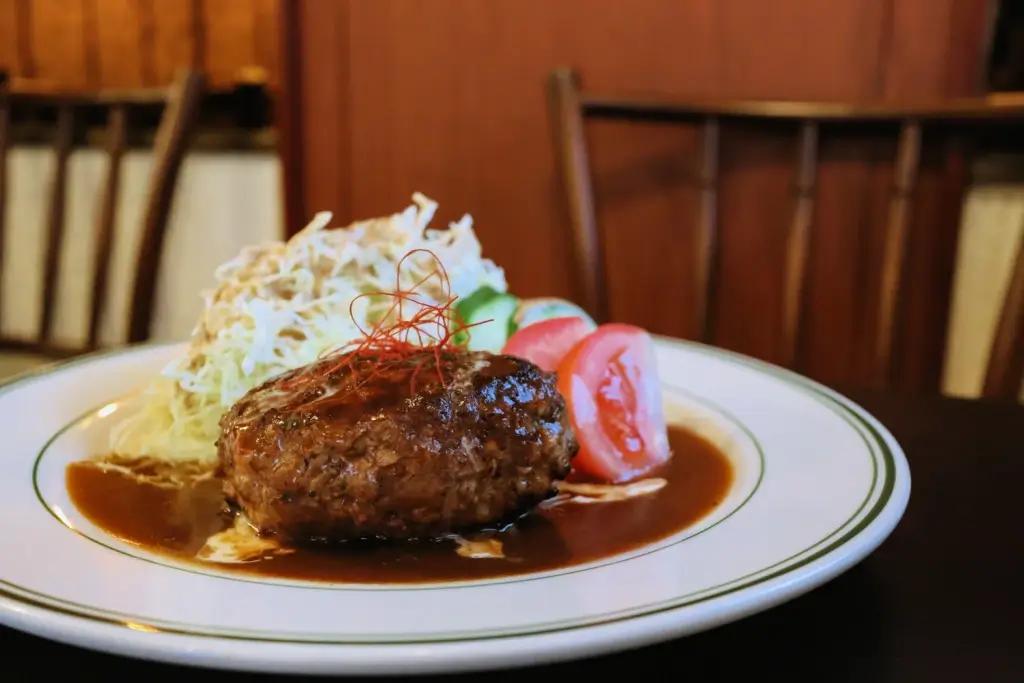
Hambāgu is Japan’s answer to the Western hamburger—but instead of fast food, it’s closer to a comforting, home-style main course elevated through technique. Made from a blend of ground beef (and sometimes pork), the patty is seasoned, shaped, and pan-seared before being finished in the oven or simmered gently in sauce.

What sets hambāgu apart is its focus on juiciness and flavor depth. Many versions incorporate finely chopped onions, breadcrumbs soaked in milk, and eggs to create a softer, more tender texture than a typical Western burger patty. It’s usually served with rice rather than bread, reinforcing its place in Japanese dining culture.
In more upscale yoshoku restaurants, hambāgu is often paired with a rich demi-glace sauce simmered for hours, adding layers of umami. Some chefs even cut into the patty at the table, allowing the juices to mingle with the sauce—turning a humble dish into something theatrical and indulgent.
Are you looking for amazing knives to make yoshoku with? Check out ZAKU! Check out ZAKU! ZAKU has authentic knives handmade in Japan for all of your culinary needs!

Napolitan spaghetti may be one of the most distinctly Japanese interpretations of Western food. Despite its Italian-sounding name, it has little to do with traditional Italian cuisine. Instead, it was created in post-war Japan, using readily available ingredients to recreate the idea of pasta.
The dish features spaghetti stir-fried with onions, bell peppers, and sausages or ham, all coated in a ketchup-based sauce. While that might sound unusual, the flavor is surprisingly satisfying—sweet, tangy, and savory all at once.

What makes Napolitan special is its unapologetic simplicity and nostalgia. It’s often associated with retro cafés (kissaten) and evokes a sense of mid-20th-century Japan adapting to new culinary influences.
At more refined yoshoku spots, chefs elevate Napolitan by using higher-quality ingredients, fresh pasta, and carefully balanced sauces. Even so, the dish retains its playful, comforting character—a reminder that yoshoku doesn’t take itself too seriously, even at its most elevated.
While yoshoku is often associated with casual comfort food, several restaurants have elevated it into a refined dining experience. Here are three high-end yoshoku establishments in Japan that are currently open:
One of Tokyo’s most iconic yoshoku institutions, Taimeiken is known for its polished execution of classic dishes and its long-standing culinary legacy. The restaurant blends nostalgic charm with a level of consistency and craftsmanship that has earned it a loyal following.
Established in 1905, Ponta Honke is widely regarded as a pioneer of tonkatsu. Its careful preparation and premium ingredients elevate a seemingly simple dish into a refined dining experience.
Located in Ginza, Rengatei is a historic yoshoku restaurant credited with popularizing several classic dishes. Its enduring reputation and attention to detail make it a cornerstone of upscale yoshoku dining.

What makes yoshoku so special isn’t just the food—it’s the philosophy behind it. Yoshoku represents Japan’s ability to absorb outside influences and transform them into something new, without losing its cultural identity. Many yoshoku dishes are tied to nostalgia. They’re often served in retro cafés and long-standing restaurants, evoking a sense of warmth and familiarity.

For many people in Japan, yoshoku is deeply connected to childhood memories. While yoshoku has deep roots, it continues to evolve. Some chefs preserve time-honored recipes, while others reinterpret yoshoku with modern techniques and fine-dining presentation.
Overall, if you’re exploring Japanese cuisine beyond the usual staples, yoshoku offers a unique entry point. It bridges cultural gaps, delivering flavors that feel both recognizable and intriguingly different. Whether it’s a perfectly fried cutlet, a richly sauced hamburger steak, or a nostalgic plate of pasta, yoshoku invites you to experience Japan through a lens of adaptation and creativity.
©2026 ZAKU Knife - All rights reserved
SUBSCRIBE TO OUR NEWSLETTER
Bet the first to know about our latest and exclusive deals