Shop Sets
Set Collection


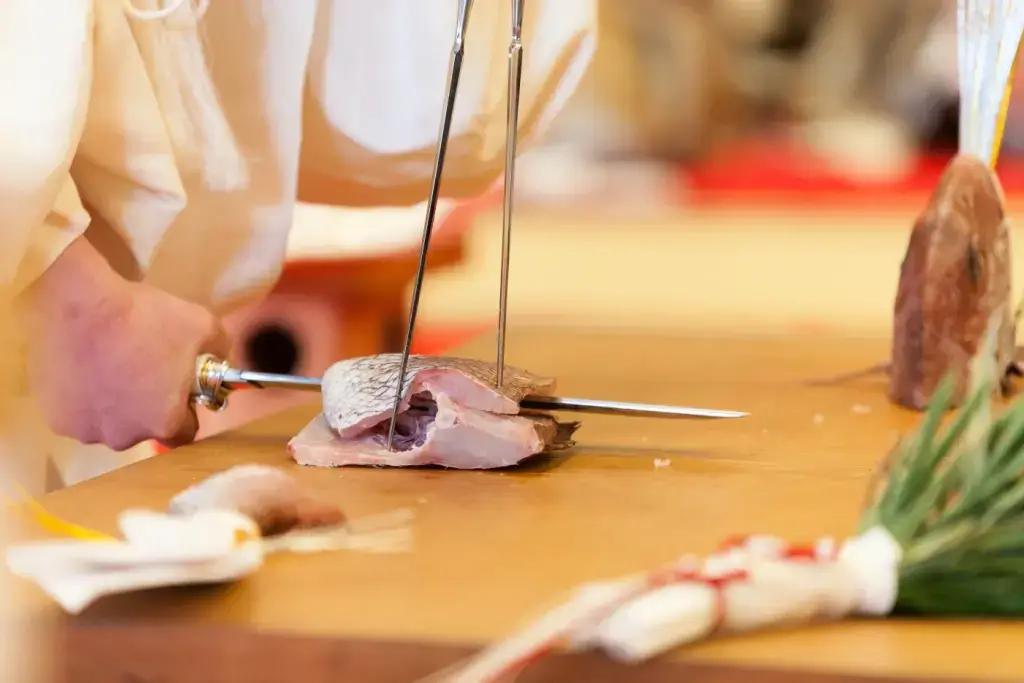
Hōchōshiki is a traditional Japanese knife ritual that dates back more than 1,000 years. It started in the emperor’s court in ancient Japan. The ceremony shows skill, focus, and respect for food. In this ritual, a chef shows how to fillet a fish without touching it with their hands. The chef uses only a knife and long metal chopsticks.
The hōchōshiki (庖丁式) ceremony is a formal event where a trained master chef cuts a fish or bird without using their hands. The ingredient is placed on a large wooden cutting board. The chef uses a knife and long metal chopsticks to move and cut the food. Each movement follows patterns taught by old cooking schools. Therefore, the cuts are slow and careful, showing strong control.
The ritual also includes special actions before and after the cutting. The tools are placed in a set order. The chef stands straight and moves with calm focus. Sea bream, called tai in Japan, is often used because it stands for celebration and good luck. The fish is not cooked. It is arranged neatly to show balance and respect for the life that was given.

Hōchōshiki began during the Heian period in Japan. It was part of the food served in the emperor’s court. Records show the ritual is more than 1,000 years old. Court chefs prepared food without touching it to show purity and respect. Over time, specialized cooking schools were established to preserve these methods.
One important group was the Shijō school. Its masters were known as hōchō-shi, or knife masters. During the Edo period, the ritual spread beyond the imperial court. Samurai families and nobles also learned it. Today, hōchōshiki is no longer used in daily cooking. Instead, it is kept alive as a public tradition that honors Japan’s food history.
The main rule of hōchōshiki is clear. The chef must never touch the food with their hands. Instead, the chef uses a long Japanese knife and metal chopsticks. The ceremony begins with a formal cleaning of the tools and board. Each movement is slow and steady. The cuts create evenly shaped pieces for display.
The tools are simple but important. Generally, the knife is a traditional Japanese kitchen blade. In addition, chopsticks help the chef move the fish without direct contact. The wooden board acts like a stage. The cutting follows a set order, unlike normal kitchen work. The pattern changes depending on the type and size of the fish.

During hōchōshiki, the chef wears court dress inspired by Heian-era court dress. This includes a tall black hat called an eboshi. The chef also wears robes such as a hitatare. Long ago, nobles and warriors wore these clothes. The outfit shows that this is not everyday cooking. It connects the ceremony to Japan’s past.
The ceremony takes place in quiet and formal spaces. It is often held at Shinto shrines, festivals, or cultural exhibitions. Soft traditional music may play in the background. The calm setting helps the audience focus on the chef’s movements. Some ceremonies are performed in front of shrine altars. As a result, this setting adds religious meaning to the event.
Hōchōshiki is more than a knife display. In the past, it was used to prepare food offerings for the gods. The chef does not touch the food, which shows purity. In Shinto belief, food and holy places must remain clean. The ritual also shows respect for the ingredient. Some shrines hold ceremonies to pray for good harvests, safety, and long life.
Many people describe the ceremony as quiet and thoughtful. The slow pace allows time for calm thinking. It also reminds viewers to respect food and understand where it comes from. Watching hōchōshiki connects today’s meals with ancient traditions. Moreover, the ritual keeps old knife skills alive. These skills were once taught only in special cooking schools.
Hōchōshiki is not used in daily kitchens today. However, it is still performed at special events. Takabe Shrine in Chiba Prefecture holds hōchōshiki ceremonies in spring and autumn. The ritual is also shown during Thanksgiving festivals. Both visitors and cooking professionals come to watch. The shrine sees it as an important food tradition.
Special exhibitions sometimes include hōchōshiki demonstrations. Chefs from schools such as Shijō-shin-ryū perform for the public. These events allow more people to see the ritual. Cultural groups sometimes perform it outside Japan as well. Hōchōshiki continues to represent Japanese food skills and history.
Hōchōshiki teaches respect for food and tradition. Preparing fish without touching it shows discipline and focus. As a result, it reminds people to handle ingredients with care. The ritual connects cooking with deeper values. It shows that skill and respect must work together.

Overall, the ceremony has survived for centuries. Schools such as the Shijō school have passed it down through many generations. Most chefs do not perform it in everyday work. Even so, it remains an important part of Japan’s food culture. Finally, it shows that cooking can carry history, meaning, and care. Have you ever seen the hōchōshiki performed? What was the experience like? Let us know in the comments below!
©2026 ZAKU Knife - All rights reserved
SUBSCRIBE TO OUR NEWSLETTER
Bet the first to know about our latest and exclusive deals