Shop Sets
Set Collection


Besides improving knife skills for daily cooking, many people also enjoy sharpening knives as a hobby. Yet, sharpening without proper knowledge or technique can damage the blade and create safety risks. If you care about your knives, you should consider these trusted options and seek help from a professional knife sharpener.
Professional knife sharpeners come in many shapes, but they are all made to restore a dull blade. Each tool has its own story, its own shape, and its own use. Some sharpen slowly with great care. Others work fast like small machines. Now, let’s look at the three main types!
A whetstone is a flat stone that helps you gently shape a knife’s edge with calm and steady hands. It comes in many grits, from coarse stones that fix chips to fine stones that polish the blade until it shines. As you control the angle, each stroke feels precise and mindful.

Moreover, whetstones let you bring back a knife’s actual sharpness without harming its steel. They are also the best choice for high-quality Japanese knives, which need gentle and careful sharpening.
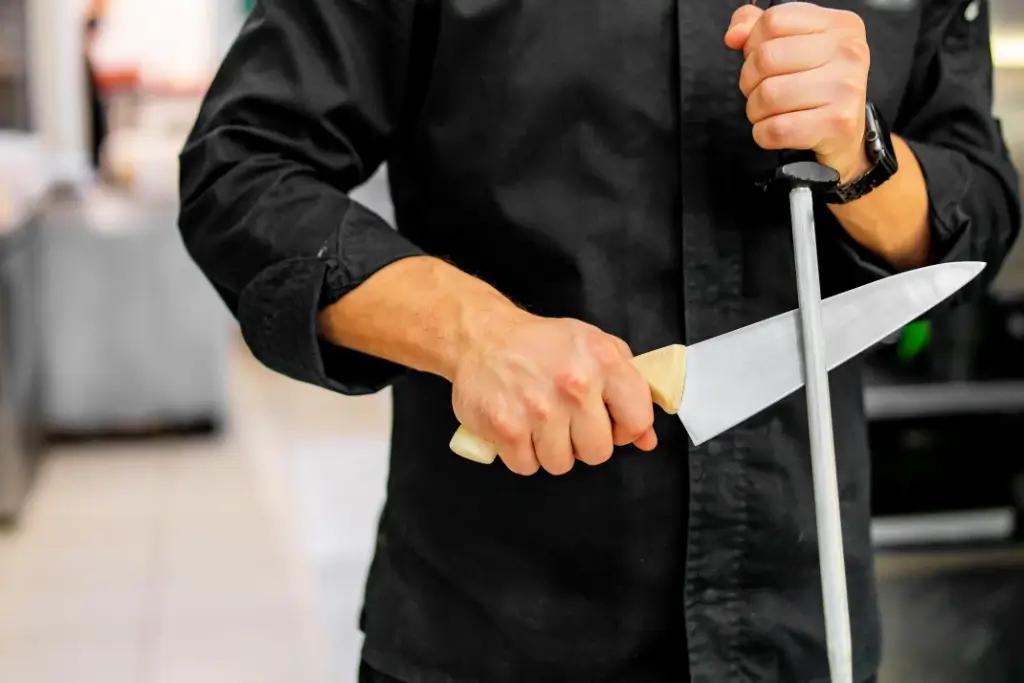
A honing rod is a long, thin tool that helps realign an edge after it has been used daily. It doesn’t remove much metal; instead, it guides the blade back into position with light, repeated strokes. Because of this, it keeps your knives sharp longer between full sharpenings. Even beginners can use a honing rod with simple movements, and the results appear quickly.

Ceramic rods can make edges smoother, while steel rods work well for everyday care. Honing rods are safe to use with many Japanese knives, but only when the blade is already sharp and just needs gentle touch-ups.
An electric sharpener utilizes a small motor and spinning abrasives to shape the edge quickly. It’s easy to use, as you simply need to slide the knife into the slot and let the machine do the work. This makes it helpful for individuals who want fast results without needing to learn detailed techniques.

However, the strong abrasives can remove more metal than needed, especially with delicate blades. A professional knife sharpener often recommends avoiding electric sharpeners for fine Japanese knives to protect their thin, precise edges.
Are you looking for amazing knives for your kitchen? Check out ZAKU! ZAKU has authentic knives handmade in Japan for all of your culinary needs!

Using professional knife-sharpening services remains worthwhile, especially for high-quality knives. Even with top-notch tools, mistakes can happen. A wrong angle or too much pressure can scratch the blade or damage its fine edge.
Japanese knives have very low bevels, often around 15°, while Western knives are sharper at higher angles. Sharpening at the wrong angle can change how the knife slices and reduce its precision. Professionals understand these differences and adjust every stroke carefully.

Additionally, severe chips or dents are often difficult to repair at home. A professional knife sharpener can safely restore the original edge, saving your expensive blade from permanent damage. Their experience allows them to handle delicate steels without risk.
Furthermore, using a professional service saves time and stress. You can focus on cooking while knowing your knives will come back sharp, smooth, and ready for every kitchen task. It’s an investment in both skill and safety for your kitchen tools.
Mail-in sharpening has become very popular today, as people enjoy safe and straightforward ways to care for their knives. With this service, you only need to pack your knife and send it out. Skilled sharpeners will handle the hard work for you, returning the blade sharp and smooth. This makes the service helpful for busy cooks and for those who live far from a knife shop.
Many trusted brands offer reliable mail-in sharpening. Dalstrong provides clean and fast work for many kitchen knives. The Knife Guy and Erik the Blade specialize in producing steady, precise edges for everyday use. Meanwhile, Korin is renowned for sharpening fine Japanese blades using gentle and precise methods.
However, you might still worry about shipping costs or possible risks during delivery. If so, you can talk directly to a knife expert near you. A short visit can help you choose the ideal method for your blade and learn valuable sharpening tips. This is an excellent way to keep your knife sharp while also growing your own knowledge.
If you use Japanese knives, you can visit traditional knife shops or local bladesmiths in Japan. You can also ask trusted cookware or cutlery stores in your area for advice. Even restaurants can guide you, since many chefs know skilled sharpeners. With these choices, you can care for your knives with confidence and find wisdom from people who genuinely understand blades.

Seeking help from a professional knife sharpener is crucial, as a skilled hand can protect your blade in ways tools alone cannot. A trained sharpener reads the steel, the angle, and the shape, then selects a method that maintains the knife’s strength for many years.
Moreover, professionals also provide you with comfort, as you know your knife is handled safely and correctly. You don’t need to guess which angle is correct or worry about removing too much metal. Instead, you gain a safe, balanced edge that feels smooth each time you cook. This thoughtful support helps you enjoy and understand your tools with greater confidence. So, which knife-sharpening sources do you trust? Let us know in the comments!
©2026 ZAKU Knife - All rights reserved
SUBSCRIBE TO OUR NEWSLETTER
Bet the first to know about our latest and exclusive deals