Shop Sets
Set Collection


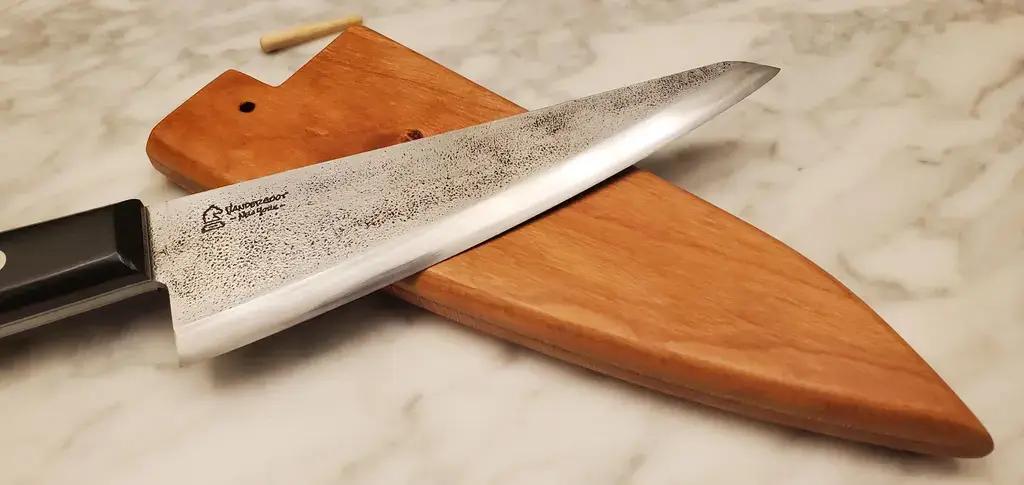
In the world of cutlery, the honesuki knife stands out as a blade of precision and purpose. Explicitly designed for deboning chicken, ducks, and other small birds, it provides unmatched control for chefs who value clean, efficient cuts.
Though compact, its triangular blade and rigid spine give it impressive strength and maneuverability. It’s an essential tool for anyone serious about Japanese cooking.
The honesuki emerged during Japan’s Edo period, when specialized cooking techniques led to the development of distinct knives for different ingredients. Japanese cuisine values precision and minimal waste, requiring tools that can cleanly separate meat from bone. Poultry was a popular ingredient for yakitori (grilled chicken skewers) and traditional dishes, and chefs needed a knife capable of working through joints and tendons without crushing the meat.

Knife-making centers such as Sakai in Osaka Prefecture became known for producing high-quality honesuki blades. Artisans refined the knife’s geometry, experimenting with bevel angles and steel hardness to achieve perfect balance between strength and precision. The result was a knife ideal for dismantling poultry efficiently while keeping cuts clean and smooth. Over time, it became a mainstay in professional Japanese kitchens.
The honesuki is distinguished by its triangular blade and rigid spine, which allows it to glide along bones and separate joints with control. Unlike Western boning knives, it lacks flexibility, making it perfect for precision work rather than slicing through large bones. The tip fits into tight joints, while the flat edge provides stability when trimming or scraping. Traditional honesuki are single-bevel, which gives a finer edge but is harder to maintain.
Modern makers also produce double-bevel honesuki, which are easier for beginners to use and sharpen. These versions maintain the triangular shape but allow for ambidextrous handling. The blade length typically ranges from 135 to 150 millimeters, with a weight that provides balance without fatigue. Traditional handles give a natural grip and lightness, enhancing control during detailed cuts.
Are you looking for unique knives to add to your collection? Check out ZAKU! ZAKU has authentic knives handmade in Japan for all of your culinary needs!

The honesuki plays an essential role in preparing poultry-based dishes throughout Japan. In yakitori restaurants, chefs often buy whole chickens and break them down themselves, using the honesuki to separate the thighs, wings, and breast with precision. This process not only minimizes waste but also ensures uniform cuts for skewering and grilling. The knife’s tip easily locates the joints, and the rigid edge helps trim cartilage and skin neatly.

Cooks also use the honesuki for preparing dishes such as karaage (fried chicken), oyakodon (rice bowl with simmered chicken and egg), and torisashi (lightly seared chicken sashimi). It can also be used for deboning small game, such as duck or quail, or for trimming red meat into delicate portions. In cooking schools, instructors use the honesuki to demonstrate traditional Japanese knife handling, teaching students how technique and respect for ingredients go hand in hand.
While the honesuki specializes in poultry, it is often compared to other knives used for butchery. One is the garasuki, a heavier and larger knife designed for more challenging tasks or breaking down larger birds. The garasuki’s thicker spine and longer blade make it ideal for professional butchers. In contrast, Western boning knives tend to be longer and more flexible, designed to follow the curves of bones in beef or pork.
The deba knife, another traditional Japanese blade, also handles butchery but in a very different context. The deba is thick, heavy, and primarily used for cutting through fish bones and heads, not for intricate poultry work. A honesuki, by comparison, prioritizes maneuverability over power, making it better for tasks requiring accuracy rather than force. Many chefs keep both knives in their collection: the deba for fish, the honesuki for birds.
If you frequently cook poultry or want to improve your knife skills, the honesuki offers a rewarding learning experience. It teaches precision, patience, and respect for the ingredient. Using it to debone a chicken is like a lesson in anatomy and craftsmanship; every cut matters, and efficiency grows with practice. The satisfaction of producing clean joints and even portions without tearing meat is deeply fulfilling.

Beyond practical use, owning a honesuki connects you to Japan’s centuries-old tradition of craftsmanship and culinary refinement. Many Japanese blacksmiths still forge these knives by hand, preserving regional forging methods from Sakai.
Even in modern kitchens, where multitasking tools are prevalent, this knife stands as a reminder that mastery comes through focus and respect for the craft. Have you ever used a honesuki before? How does it compare to your other knives? Let us know in the comments below!
©2026 ZAKU Knife - All rights reserved
SUBSCRIBE TO OUR NEWSLETTER
Bet the first to know about our latest and exclusive deals