Shop Sets
Set Collection



The kiritsuke knife is a traditional Japanese kitchen knife known for its long, flat blade and precise cutting ability. It combines elements of several other Japanese knives into a hybrid tool designed for skilled users and chefs.
Kiritsuke knives are most common in professional kitchens and are also available to home cooks interested in Japanese blades. Understanding the kiritsuke’s design and function helps cooks decide whether it belongs in their kitchen.
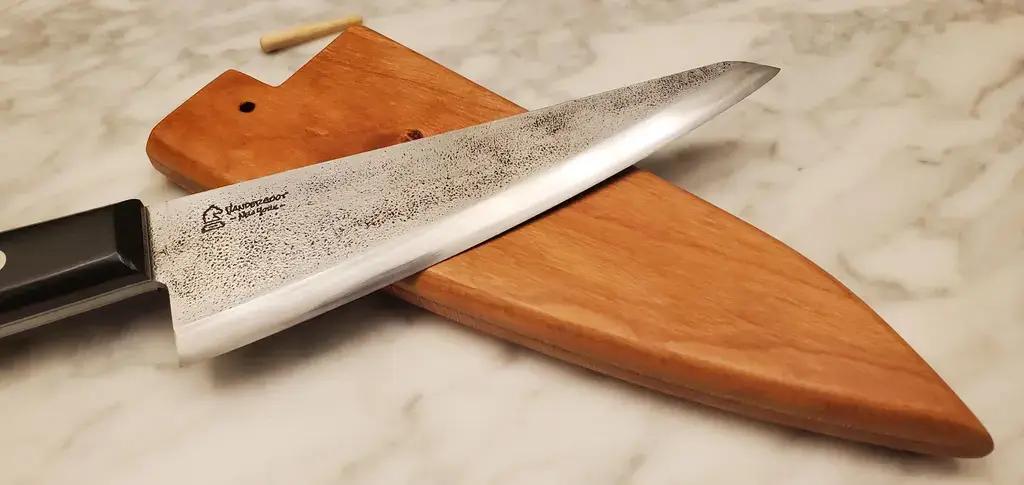
A kiritsuke knife features a long, flat blade with a pointed tip, typically measuring between 240mm and 330mm. Its design blends features of the yanagiba, used for slicing raw fish, and the usuba, used for vegetables, giving it versatility. Traditional kiritsuke knives often have a single-bevel edge, which can make them sharper but more complicated to use. Modern double-bevel versions are easier for many cooks while maintaining precision and accuracy.

The name kiritsuke (切付) means “to slit open,” reflecting its role in precise cutting tasks. The long, flat edge allows smooth, continuous cuts that reduce tearing on delicate foods. The angled tip provides precise control for fine work, making it a highly effective precision tool. Due to its hybrid nature, it is sometimes referred to as a chef’s knife for its specialized tasks. The design and traditional use have made it a symbol of skill in Japanese cuisine.
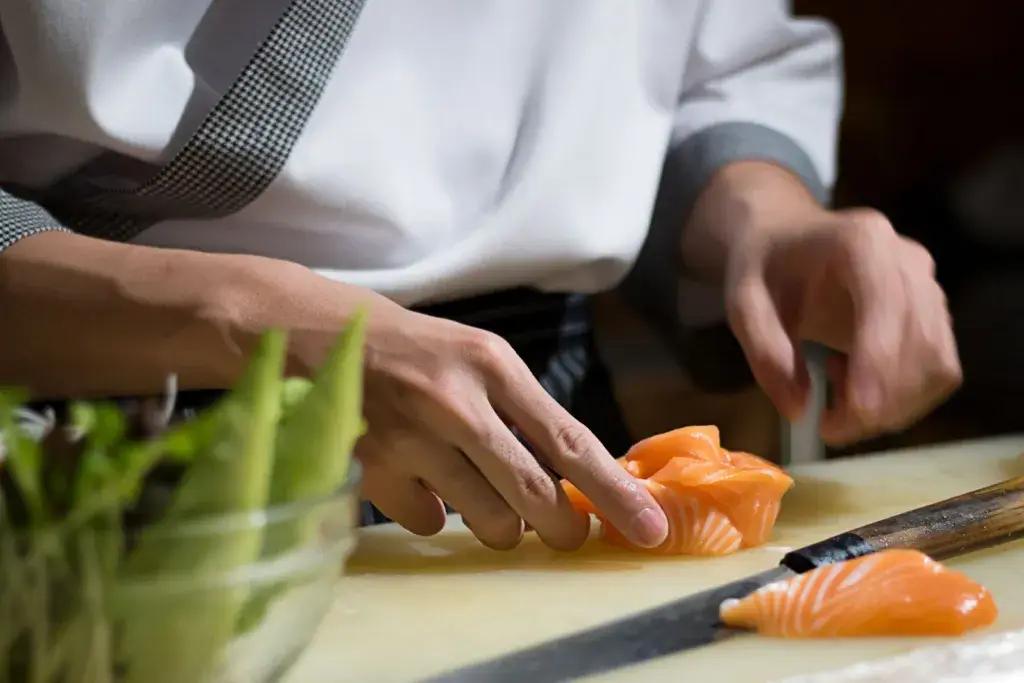
Kiritsuke knives are used for tasks requiring precision in professional and serious home kitchens. The long, flat blade is ideal for slicing sashimi and other raw fish smoothly, preserving texture and appearance. It also works well for trimming boneless meats and cutting vegetables evenly. Delicate items, such as herbs and tofu, can be prepared with minimal bruising. Its versatility allows cooks to handle a wide range of ingredients efficiently.
The pointed tip allows detailed work, such as scoring fish skin or making decorative cuts. The flat edge is less suited to rocking motions, so cooks must adapt from curved Western-style knives. Double-bevel kiritsuke knives expand usability for trimming, portioning, and general slicing. While not a complete replacement for all knives, it handles a range of tasks. The knife’s combination of features makes it highly valued among professional chefs.
Are you looking for interesting knives to use in your kitchen? Try ZAKU! ZAKU has authentic knives handmade in Japan for all of your culinary needs!

The kiritsuke’s blade has a low belly and a long, straight edge, distinguishing it from Western chef’s knives. The tip, often a reverse tanto or K-tip, provides control for precise cutting near the tip. Single-bevel kiritsuke knives are incredibly sharp but require skill to use and maintain. Double-bevel versions make the knife more accessible for home cooks while keeping its precision. Its flat edge supports push and pull slicing rather than rocking cuts.

The tall blade gives knuckle clearance and extra control for downward cuts. Some variants resemble long gyuto or bunka knives but retain the flat edge for delicate work. Materials include high-carbon steel for sharpness and stainless or Damascus steel for balance. Each material affects durability, edge retention, and maintenance. The combination of shape and material enables chefs to select a knife that suits their style and tasks.
Proper care is essential for maintaining performance, especially for high-carbon kiritsuke knives. Hand wash with mild soap and warm water, then dry immediately to prevent rust. Store on a magnetic strip, in a wooden block, or in a protective sheath to protect the edge. Avoid dishwashers, which can damage the blade with harsh detergents and humidity. Regular care preserves the blade’s sharpness and ensures consistent cutting performance.
Sharpening is crucial, particularly for single-bevel knives, which require whetstones to maintain their edge. Regular honing with a ceramic rod or leather strop helps between sharpening sessions. Acidic foods can harm carbon steel, so wiping and drying after contact reduces oxidation. Even stainless blades benefit from proper storage and drying. With attention and maintenance, a kiritsuke can remain precise and durable for many years.
The kiritsuke blends features of the yanagiba and usuba knives. The yanagiba is long and narrow, ideal for slicing raw fish with a single-bevel edge. The usuba is a straight-edged vegetable knife used for julienne and fine cuts. The kiritsuke combines the slicing precision of the yanagiba with the flat edge of the usuba. This hybrid design allows it to handle protein and vegetable tasks efficiently.
Despite similarities, the kiritsuke differs in approach and versatility. Its long blade and angled tip provide more control than the yanagiba. Unlike the usuba, it works with fish, meat, and vegetables, making it suitable for a variety of tasks. Single-bevel versions maintain traditional sharpness, while double-bevel knives are easier for home cooks. Understanding these differences helps cooks select the right knife for their needs.
Is a kiritsuke necessary for everyday use? The answer depends on a cook’s skill and cutting goals. For sashimi, fine vegetables, and presentation-focused dishes, the long, flat blade provides unmatched precision. Push-and-pull slicing minimizes tearing, and double-bevel versions increase usability. However, the flat edge is less suited for rocking cuts and can be unwieldy in small kitchens.

Does the kiritsuke offer more versatility than a standard chef’s knife? It bridges specialized knives like yanagiba and usuba, combining multiple functions in one blade. Home cooks who value precision slicing may find it beneficial. Less experienced cooks may face a learning curve with single-bevel versions. For general home use, a double-bevel kiritsuke or sharp chef’s knife can cover most tasks. Do you have a kiritsuke knife? What do you use it for? Let us know in the comments below!
©2026 ZAKU Knife - All rights reserved
SUBSCRIBE TO OUR NEWSLETTER
Bet the first to know about our latest and exclusive deals