Shop Sets
Set Collection


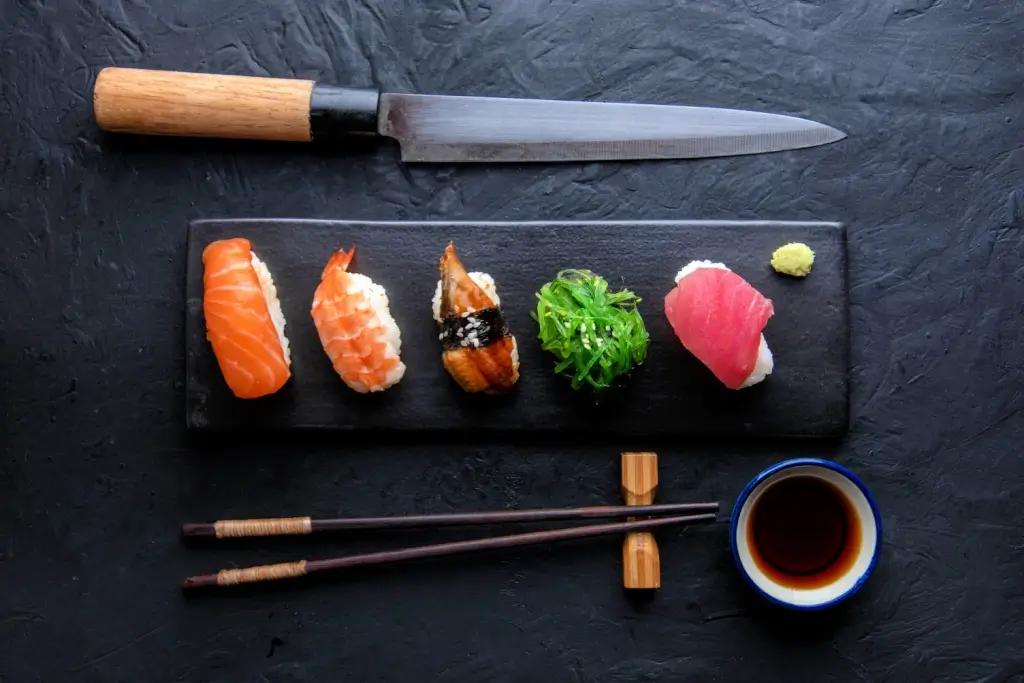
One of the most treasured highlights of Japanese cuisine is sushi. This traditional dish has been a familiar part of Japanese life for centuries. It showcases each ingredient’s natural taste and texture in its purest and most unique form.
Many people still confuse it with sashimi, but they are pretty different. Let’s explore this delightful dish together and discover the special knife used to prepare it!
Sushi is made of soft, vinegared rice that tastes slightly sweet and sour, mixed with simple seasonings like salt and sugar. This special rice is paired with various toppings, including fresh fish, vibrant vegetables, sweet eggs, or even cooked seafood like eel or shrimp. Sushi first appeared in Japan as a quick meal in Edo, now known as Tokyo, where chefs placed seafood on small, hand-pressed rice shapes.

Today, sushi comes in many fun forms. Nigiri has a small pillow of rice with a topping gently pressed on top. Maki is rolled tightly inside seaweed and sliced into neat, circular pieces. Temaki is shaped like a cone that you hold in your hand, while chirashi is a colorful bowl of sushi rice topped with various ingredients. Each variety has its own unique charm, and the ingredients are carefully selected to maintain fresh and balanced flavors.
Although sushi and sashimi are sometimes confused, they are distinct. Sushi always includes vinegared rice, while sashimi is simply thin slices of raw fish served without rice. Sushi is also often served with extras like soy sauce, pickled ginger, or wasabi, which add more flavor and help keep the food safe.
It can be safe to eat as long as it is prepared carefully and handled with proper hygiene. Its appeal comes from using fresh fish carefully selected and kept at the right temperature. When you choose a trusted restaurant or supplier, and the fish has been frozen or stored correctly to reduce parasites and bacteria, sushi becomes both delicious and safe.

A key factor is the use of what many refer to as “sushi-grade” fish. This usually means the fish has been frozen at very low temperatures before being served raw. Freezing at about -20°C (-4°F) for a week, or at even colder temperatures for a shorter time, helps eliminate parasites. Reliable sushi establishments maintain their fish at a consistently low temperature and prepare it with clean knives and hands, thereby reducing the risk of bacterial contamination.
Enjoyed safely, this traditional dish also offers health benefits. Fish such as salmon and tuna provide healthy omega-3 fats and high-quality protein that support your heart, brain, and overall well-being. Combined with ingredients like seaweed, rice, and vegetables, sushi becomes a meal that is both tasty and nutritious.
To make the dish correctly, selecting the right knife is as essential as choosing fresh ingredients. Japanese sushi knives come in several specialized types, each crafted for a specific kitchen task. The Yanagiba, with its long, thin single-bevel blade, slices raw fish into clean, precise pieces. Its design glides through fish without crushing the texture. The Sujihiki, featuring a double-bevel edge, is ideal for handling raw fish, cooked meats, and poultry and giving chefs smooth cuts.

For heavier tasks, the Deba is a robust single-bevel knife ideal for filleting whole fish and cutting through small bones. Meanwhile, the Usuba focuses on vegetables, offering straight, precise cuts for garnishes and presentation. In the Kansai region, the Takohiki resembles the Yanagiba but features a rectangular blade suited for slicing octopus or other specialty seafood.
When selecting a sushi knife, factors such as blade material, edge type, handle, length, and weight are crucial. High-carbon steel retains its sharp edge longer but requires more careful maintenance, while stainless steel offers easier upkeep. Single-bevel edges allow extraordinary precision but are typically right- or left-handed, whereas double-bevel knives are more forgiving.
Are you looking for great knives for your kitchen? Check out ZAKU! ZAKU has authentic knives handmade in Japan for all of your culinary needs!

Many people wonder how to master the skill of cutting sushi rolls. It may look easy, but it is actually a crucial step that makes the dish look and taste perfect. The key is using the right knife and the correct technique to avoid squashing or tearing the roll.

First, always use a very sharp knife and dip the blade in water before cutting. A long, straight knife allows for smooth, clean slices. Avoid chopping straight down. Instead, slice in one fluid motion, gently pulling the knife toward yourself. Clean the blade after each cut to remove rice that sticks, and keep it wet for easier slicing.
Next, pay attention to the roll itself. Tuck the ingredients in properly to seal the roll and prevent overfilling, which can cause it to fall apart. Apply gentle, even pressure with the makisu (bamboo mat) when rolling, and never press the knife down too hard. A delicate touch ensures the roll stays intact.
Finally, timing matters. Cut the rolls while the rice is still warm, as cold rice can make the nori tough and harder to slice. With patience and practice, using these techniques will help you master sushi roll cutting like a professional chef.
Tasting sushi is an opportunity to experience a different way of thinking about food, one that values simplicity, freshness, and skill. It invites you to slow down and notice the natural textures and flavors of fish, which can be both calming and inspiring.

While it may seem delicate or difficult to prepare, this dish also opens the door to learning. If you understand how to select fresh ingredients, prepare them safely, and utilize the right tools, such as a proper knife, making this dish at home can become a thoughtful and rewarding practice. Have you ever thought about making it yourself? What would inspire you to try? Let me know in the comments.
©2026 ZAKU Knife - All rights reserved
SUBSCRIBE TO OUR NEWSLETTER
Bet the first to know about our latest and exclusive deals